
How to Play Suited Connectors Preflop in 6-Max NLHE
Suited connectors like T9s and 76s are the hands everyone wants to play and the hands most players quietly lose money on. They flop the disguised monsters that get paid, and they tempt you into loose calls that bleed big blinds hand after hand. The fix is not to stop playing them; it is to play them in the right spots, at the right price, at the right stack depth. This guide covers how to play suited connectors preflop in 6-max NLHE cash games: when to raise them, when to call with them, and when folding is the disciplined answer.
What Counts as a Suited Connector
A true suited connector is two adjacent ranks in the same suit: 65s, 76s, 87s, 98s, and T9s are the classic members. Close cousins are the one-gappers (86s, 97s, T8s) and two-gappers (85s, 96s), which play similarly but flop straights less often. Suited aces like A5s carry ace-high equity and the nut flush draw, so they belong to a separate discussion.
One thing worth internalizing early: each specific suited hand is only 4 combos on the 13x13 grid, which is why raw equity matters more than hand feel when you compare categories. To count combos the way solver ranges do, see our poker combinatorics guide.
Why Suited Connectors Get Overrated
The raw equity of a suited connector is modest. Being suited adds only about two to three percentage points of equity compared with the same hand offsuit, and even a premium connector like T9s starts well behind a mid pocket pair before the flop. What makes these hands valuable is playability: they flop straight draws, flush draws, and combo draws that can win big pots.
The catch is frequency. An unpaired hand misses the flop entirely about two thirds of the time, and a suited connector that flops one weak pair is miserable to play out of position. The real preflop question is not "is this a pretty hand" but "is the price and position set up to profit when it hits?"
Suited Connectors by Position at 100bb
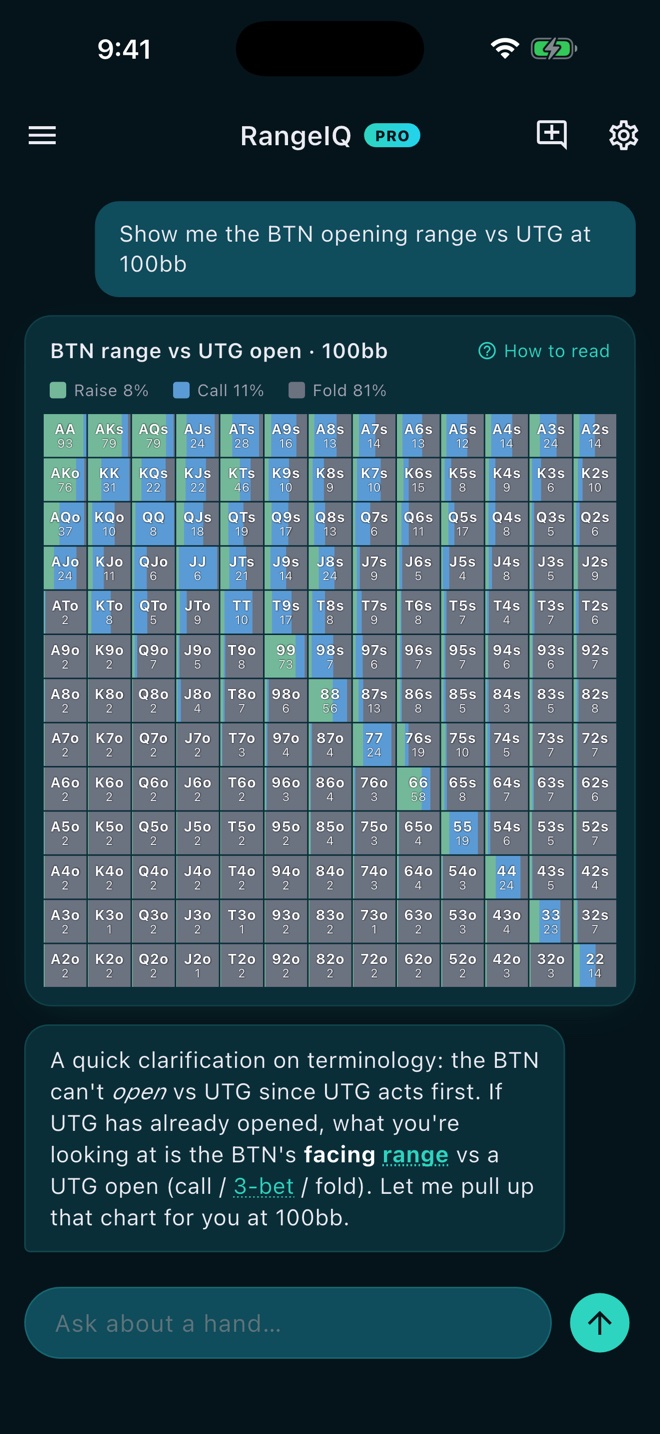
Preflop strategy is built position first. Here is how suited connectors slot into an open-raise strategy at 100bb:
- UTG: The tightest range. The lowest connectors are folds, and only the stronger ones appear as opens or mixes.
- HJ and CO: As your position improves, more connectors earn a spot in the raising range.
- BUTTON: The widest range in the game. Nearly every suited connector becomes a profitable open.
- SB: Raise-first-in ranges include the stronger connectors, but the out-of-position risk cuts more of them than most players expect.
- BB: In 6-max the big blind never has an open-raise. Its entire preflop strategy is responding to the action in front of it.
One structural note: the solves RangeIQ teaches cover a no-limp game, where play from an unopened seat is open-raise or fold. If a suited connector is worth playing from an unopened seat, it is worth raising.
Facing a Single Open: Call, 3-Bet, or Fold
Most of a suited connector's value facing an open comes from calling in position, not from 3-betting. On the button or in the cutoff against an earlier seat's open, the mid and high connectors make natural calls: you see a flop with a playable hand and act last the whole way.
The big blind is the exception that works. Closing the action with a discounted price makes calling with suited connectors correct at 100bb far more often than players realize. The small blind is the trap: out of position, first to act after the flop, paying almost a full bet. Solver ranges fold most suited connectors there against a raise, and flatting them is one of the most common leaks in low stakes games.
What about 3-betting? A few connectors appear in 3-bet ranges as bluffs, especially from the blinds, but they are the exception. When you open a connector and face a 3-bet, the default at 100bb is a fold: the implied odds that justify the hand have collapsed.
Stack Depth Changes Everything
Suited connectors are speculative hands, and speculation lives or dies on implied odds, which makes stack depth the biggest variable in how to play them.
At 100bb, the guidelines above apply: raise the connectors your position allows and give them up against 3-bets.
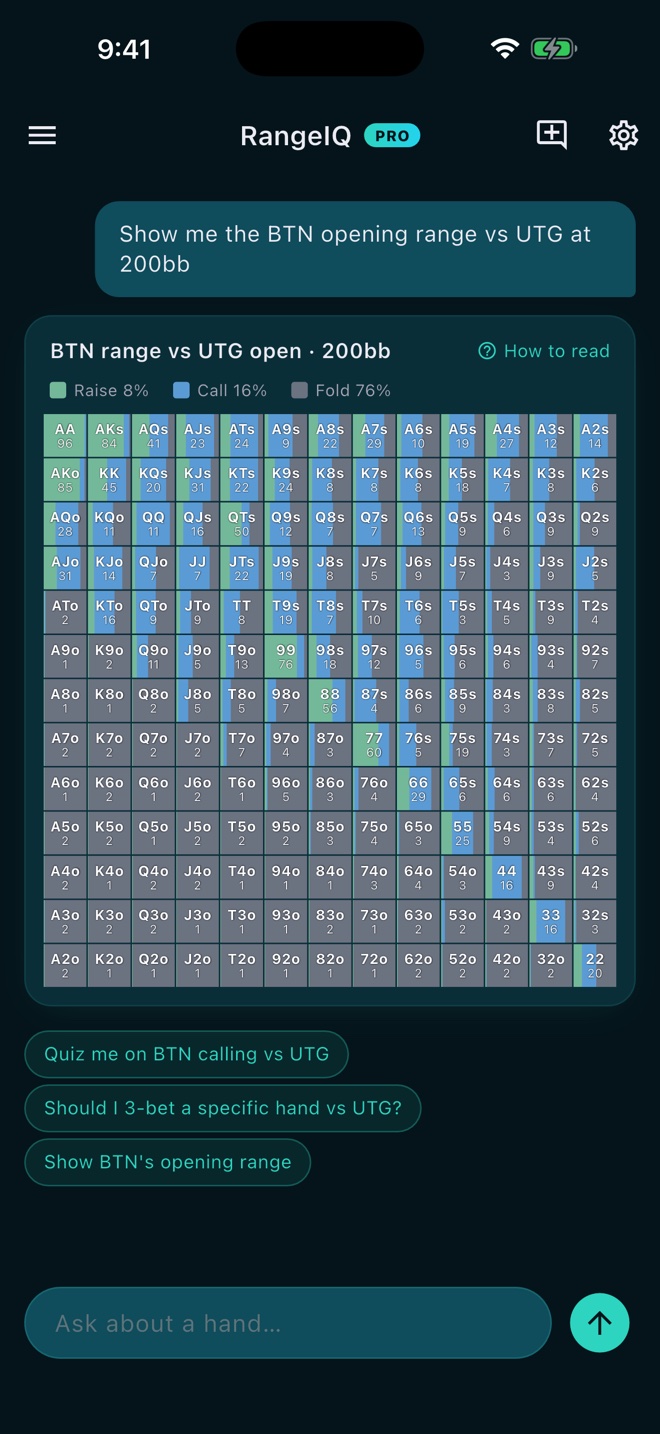
Deep at 200bb, the payoff when you connect grows much faster than the preflop price. RangeIQ's grid for the button against an UTG open shows the call share widen to 16 percent at 200bb, and suited connectors are a meaningful slice of that widening. If you play deep-stacked games, this is where these hands earn their keep.
At 25bb and below, the game turns into push/fold and suited connectors lose the implied odds entirely. There is no stack left to pay you off when you connect, so the raise band on the grid reads Jam, the legend shows Jam and Fold only, and the ranges shrink to the hands with enough raw all-in equity. The lowest connectors mostly disappear. The 15bb button range looks nothing like the 100bb one, and studying them separately is the whole point.
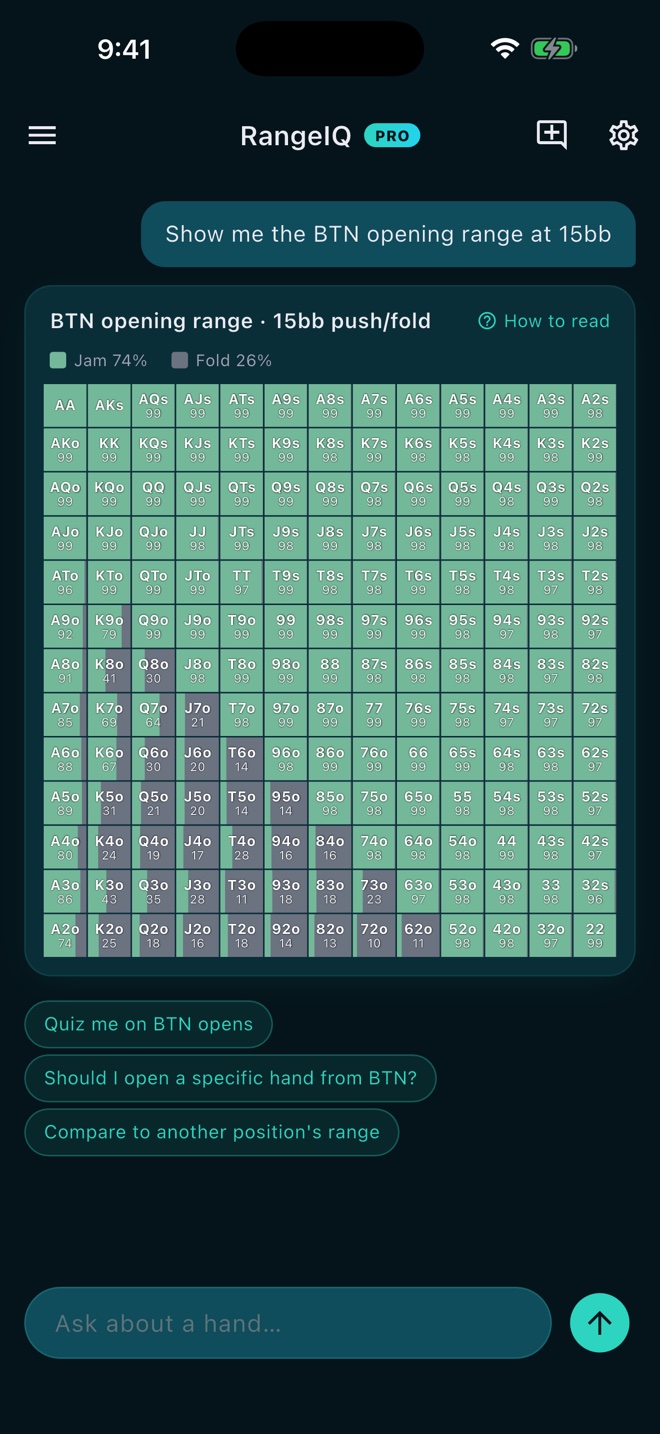
RangeIQ serves solves at 10 stack depths from 10bb to 250bb. Ask for a range at any served depth and the coach shows the exact 13x13 grid; ask at an unserved depth like 120bb and it tells you honestly that it is answering from the nearest solved depth. For the full picture, see our guide to preflop ranges by stack depth.
Four Common Suited Connector Mistakes
Flatting from the small blind
The small blind is the worst seat in poker. You post a partial blind, act first after the flop, and get a bad price with no fold equity. Folding most suited connectors there against an open is not tight; it is correct.
Calling against 3-bets at 100bb
When the pot inflates and the stack-to-pot ratio drops, the money goes in before your draws can develop. Suited connectors facing a 3-bet at standard depths are mostly a fold.
Treating every connector the same
T9s and 32s are not the same hand: higher connectors make more and stronger straights, and the gap between a premium connector and the bottom of the family is bigger than the gap between a connector and a one-gapper.
Ignoring stack depth
Calling 76s from the big blind at 200bb and at 15bb are completely different decisions: deep you are hunting implied odds, short you are playing raw all-in equity. Play the depth you actually have.
How to Study Suited Connector Decisions
Reading is the start; turning it into instinct takes reps. Here is a routine for fixing suited connector leaks:
- See where they sit. Ask the RangeIQ coach "What is the BTN opening range at 100bb?" and watch which connectors survive as you move from UTG to the button.
- Check the response ranges. Ask "What is the BB range vs a BTN open at 100bb?" and find which connectors call. Then ask the same about the small blind and watch how many of them disappear.
- Move across depths. Pull up the same spot at 200bb and 15bb and compare the grids. The wider calls deep and the jam-only bands short will rewire your defaults fast.
- Drill the spots. Ask the coach to drill you on button opens or blind defense. The deck spreads across GTO actions and prefers the hands you keep missing, so your real leaks get the reps.
- Review your mistakes. Say "Review my mistakes" and the coach builds a deck from your leak hands only, priced in big blinds. Your Leak Score trends down as the fixes stick.
Suited connectors pair naturally with the other speculative family in your range: our guide to playing pocket pairs preflop covers the set-mining hands that also want the right price, position, and depth.
Quick Reference: Suited Connectors at 100bb
- T9s, 98s: Open from most unopened seats except UTG's tightest mixes. Call single opens in position and from the big blind. Fold to most 3-bets.
- 87s, 76s: Open from late position and mix in the middle seats. Call in position facing a single open. Fold facing 3-bets.
- 65s, 54s: Late position opens, with mixes from the middle. Big blind calls against many single opens. Fold to 3-bets.
- 43s, 32s: Mostly button-only territory. Fold facing raises unless deep stacked.
These are baseline guidelines; the exact mixes shift by seat and depth. Start from the solver's grid before you deviate.
The Discipline That Pays
Suited connectors reward players who are honest about price, position, and depth, and they punish everyone else a few big blinds at a time. Raise them where your position allows, call them in position and from the big blind, release them against 3-bets at standard depths, and rethink everything when the stacks get deep or short.
RangeIQ shows you the exact 13x13 grid for every 6-max position across 10 stack depths, then turns the suited connector spots you get wrong into drills until the right answer is automatic.
Fix your leaks with grounded GTO coaching
RangeIQ gives you exact ranges and equities from a real solve, then drills the hands you get wrong. Free to start.
Download RangeIQ