
How to Play Pocket Pairs Preflop in 6-Max NLHE
Pocket pairs are some of the most misunderstood hands in 6-max No Limit Holdem. Players either overvalue them blindly or fold small pairs too often out of fear. The truth is that pocket pairs fall into three distinct tiers, and the right preflop action depends on the pair, your position, the action behind you, and your effective stack depth. In this guide we break down how to play pocket pairs preflop in 6-max NLHE cash games so you can stop guessing and start making grounded decisions.
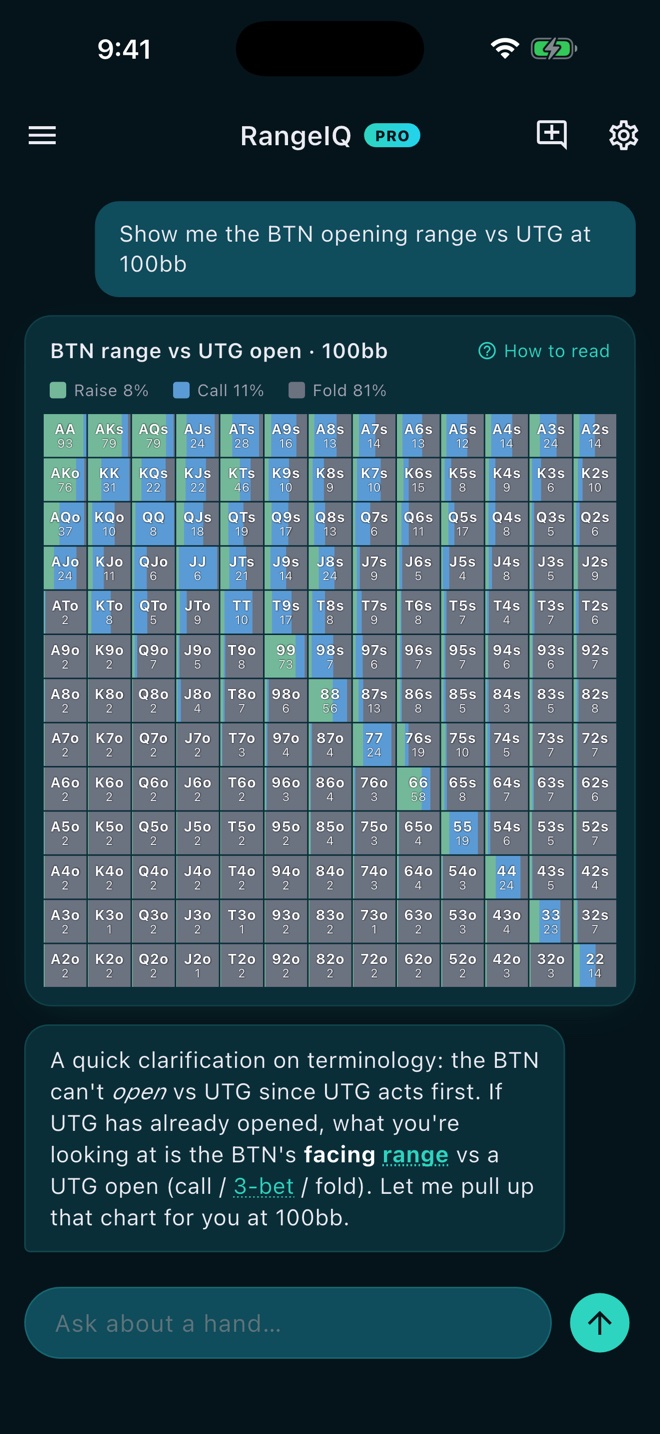
The Three Tiers of Pocket Pairs
Not all pocket pairs are created equal. GTO solver ranges divide them into three groups based on how they perform across positions and stack depths:
- Big pairs (JJ+): Premium hands that raise and 3-bet aggressively from every position. These are the top of your range and play well in enlarged pots.
- Medium pairs (77 through TT): Strong raising hands from most positions, but they need more care facing a 3-bet. They can call opens from later seats and 3-bet from some positions.
- Small pairs (22 through 66): Set-mining candidates. Their value comes mostly from flopping a set. They raise from late position and call opens from earlier positions when the price is right.
Understanding which tier your pair belongs to is the first step. The second step is knowing what your position and the action behind you tell you to do.
Big Pairs: JJ, QQ, KK, AA
Big pairs are the easiest to play and the hardest to misplay. These hands are raises from every position in 6-max NLHE. From UTG, you open-raise JJ+ for value. From the button, the same. The range grid below shows how these hands sit solidly in the raise column no matter where you are.
Facing a single open, big pairs are usually 3-bets. QQ and above are clear 3-bets against any opener. JJ is a 3-bet against early position opens from UTG and HJ, but can mix in some calls against later position opens when you want to keep the opener's range wide. Against a 4-bet, KK and AA are always shoves or 5-bets. QQ often is too, though at deeper stacks it can mix in calls. JJ facing a 4-bet is the classic tough spot: against tight 4-bet ranges it is a fold, against wide late position 4-bets it can continue.
The key mistake players make with big pairs is flatting too often when they should be building the pot. These hands want to get money in while they are ahead. Do not get fancy.
Medium Pairs: 77, 88, 99, TT
Medium pairs are where decisions get interesting. These hands are open-raises from every position at 100bb. The question is what to do when you face a raise.
From early position (UTG, HJ), medium pairs are straightforward opens. Facing a 3-bet, TT and 99 usually call while 77 and 88 mix between calls and folds depending on the 3-bettor's position. A CO or BTN 3-bet is wider, so you can call more liberally. An UTG 3-bet is tighter, so you lean toward folding the lower end of this group.
Facing a single open from the blinds, medium pairs are usually calls. You have the price to see a flop and try to flop a set or an overpair. Facing a 3-bet when you opened from late position, these pairs are mostly calls at 100bb. The implied odds of flopping a set or playing an overpair against a wide 3-betting range justify continuing.
The biggest leak with medium pairs is folding too often facing a single open. If you are in the big blind with 88 and the button opens, folding is a mistake. You have a pair, you have position on the raiser only in the blinds (you do not have position, but you have a discounted price), and the GTO range calls here. Trust the math.
Small Pairs: 22 through 66
Small pairs are the set-miners. You are playing these hands to flop a set, and when you do not, you need to be disciplined enough to let them go. The question is whether the price and the position justify the attempt.
From UTG and HJ, small pairs are opens at 100bb. You raise to win the blinds outright sometimes, and when called, you have a pair with set-mining potential. From CO and BTN, small pairs are always opens. From the small blind, 55 and 66 are opens while 22 through 44 mix between opens and folds.
Facing a single open, small pairs are calls from the big blind when you are getting the right price. The classic set-mining math says you need about 8 to 1 implied odds to call profitably for a set, and the big blind often gives you close to that. Facing a raise from late position with a wider range, calling small pairs from the blinds is standard GTO play.
Facing a 3-bet, small pairs are usually folds at 100bb unless you are deep. The set-mining math does not work when the 3-bet inflates the pot and the 3-bettor's range is strong enough that you will not always get paid off. At 200bb, the math shifts and small pairs become calls more often because the implied odds improve dramatically.
How Stack Depth Changes Pocket Pair Strategy
Stack depth is one of the most important variables for pocket pairs, and it is where most players go wrong by treating every stack the same.
At 100bb, the standard guidelines above apply. Small pairs call opens for set-mining value, medium pairs raise and call 3-bets selectively, and big pairs build pots.
At 200bb, small pairs become more valuable. The deeper the stacks, the better your implied odds for set mining. Hands like 22 through 55 that might fold to a 3-bet at 100bb become calls at 200bb because the payoff when you hit is so much larger. Medium pairs also call more 3-bets deep because postflop play is less about preflop equity and more about how much money you can win when you connect.
At short stacks (25bb and below), the game shifts to push/fold. Small pairs lose their set-mining value because the implied odds vanish. 22 through about 55 become shove-or-fold hands depending on position and stack depth. Medium pairs become strong shoves. Big pairs are still raises or shoves depending on the exact depth. The push/fold ranges at 15bb, for example, look very different from the 100bb ranges, and you need to study them separately.
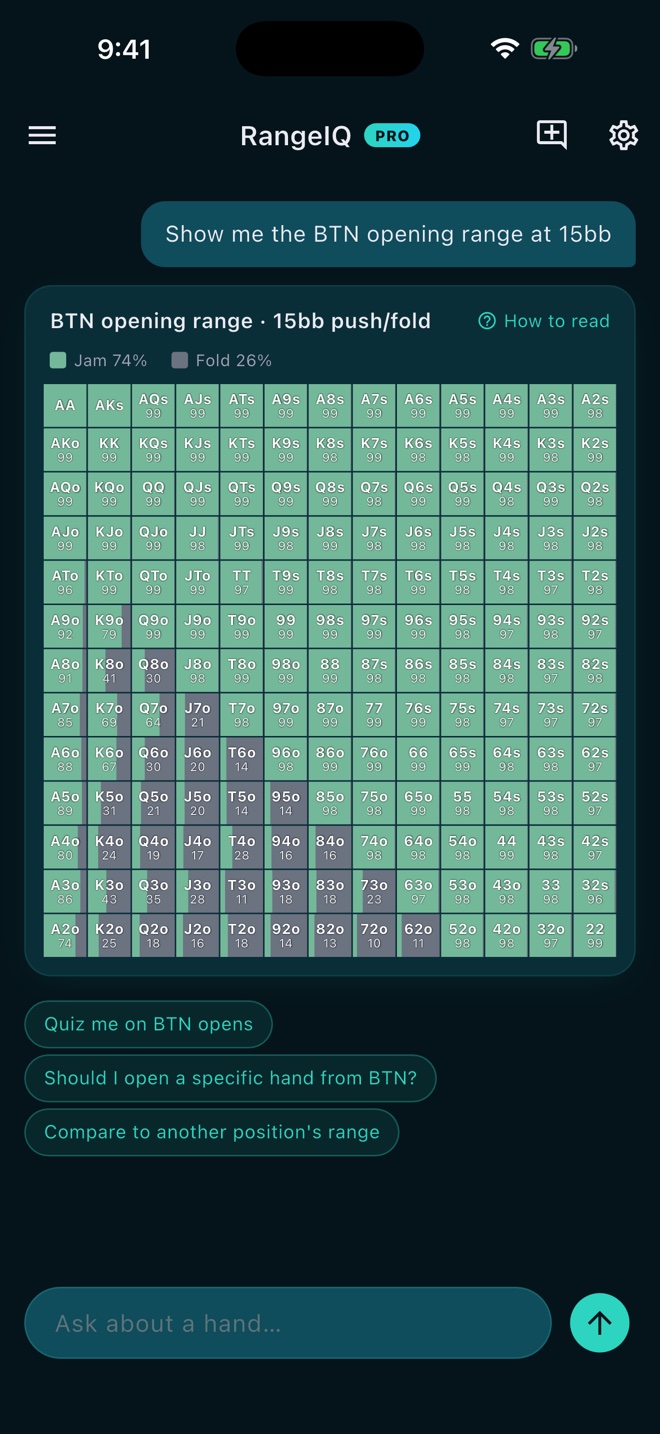
The RangeIQ solver covers 10 stack depths from 10bb to 250bb, so you can study how pocket pair ranges shift at each depth. You can ask the chat coach for a range at any served depth and see the exact 13x13 grid with raise, call, and fold bands for every hand.
Common Pocket Pair Mistakes
Overvaluing small pairs in 3-bet pots
Small pairs do not play well in 3-bet pots at 100bb. The preflop investment is too large relative to the stack-to-pot ratio, and you will miss the set 88 percent of the time. Unless you are deep stacked, fold small pairs to 3-bets.
Folding medium pairs too tight
TT and 99 are strong hands. Folding them to a single open from the big blind is a mistake that costs you big blinds over time. The GTO range calls these hands in most spots, and the EV loss from folding is real.
Flatting big pairs when you should 3-bet
Calling with QQ or KK to "keep their range wide" sounds clever but usually just leaves money on the table. Big pairs want to build the pot preflop. 3-betting also forces out the hands that would crack your pair with two pair or a set.
Ignoring stack depth
Playing 22 the same way at 100bb and 25bb is a leak. At 100bb you call opens and set mine. At 25bb the set-mining math does not work and the hand becomes a shove or fold based on push/fold ranges. Always check your effective stack before deciding.
How to Study Pocket Pair Decisions
Reading about the right play is a start, but building an instinct for pocket pair decisions takes practice. Here is a study routine that works:
- Look at the ranges: Open the RangeIQ coach and ask for opening ranges by position. See where each pair sits on the 13x13 grid. Notice how small pairs move from fold to raise as you shift from UTG to BTN.
- Check facing-a-raise ranges: Ask "What is the BB range vs a BTN open at 100bb?" and see which pairs call, which 3-bet, and which fold. The visual grid makes the tier system obvious.
- Test at different depths: Ask for the same spot at 200bb and 15bb. Compare the grids. The shift in small pair strategy is dramatic and worth internalizing.
- Drill the spots: Use drills to practice pocket pair decisions under pressure. The drill deck will feed you hands in your weak spots until your first-try accuracy improves.
- Review your mistakes: Say "Review my mistakes" to the coach and it will build a deck from your leak hands. If you keep folding TT in the big blind, that leak will show up with a bb cost attached.
The range memorization method we covered earlier pairs well with this routine. Chunk by pair tier (big, medium, small) and by position, and you will build recall faster than trying to memorize 169 cells at once.
Pocket Pair Quick Reference
Here is a quick summary you can reference at the table. These are guidelines for 100bb effective stacks in 6-max NLHE cash games:
- AA, KK, QQ: Open-raise from every position. 3-bet facing any open. Call or 5-bet shove facing a 4-bet.
- JJ, TT: Open-raise from every position. 3-bet or call facing a single open depending on the opener's position. Call most 3-bets.
- 99, 88: Open-raise from every position. Call facing a single open from most positions. Mix calls and folds facing 3-bets.
- 77, 66, 55: Open-raise from every position, more confidently from late position. Call from the blinds facing a single open. Fold to most 3-bets.
- 44, 33, 22: Open-raise from late position. Call from the big blind facing a single open. Fold to 3-bets.
Remember: these are baseline GTO ranges. Adjust based on stack depth and opponent tendencies, but start from the solver's answer before you deviate. If you want to see the exact ranges for any position and stack depth, ask the RangeIQ chat coach and it will show you the grid.
Stop Guessing, Start Grounding Your Decisions
Pocket pairs are profitable when you play them in the right spots and costly when you do not. The difference between a winning player and a break-even one often comes down to a few big blinds per 100 in preflop pair decisions. By understanding the tier system, adjusting for stack depth, and drilling your weak spots, you can turn pocket pairs into a consistent source of EV.
RangeIQ gives you the exact GTO ranges for every position and stack depth, then drills the pocket pair spots you keep getting wrong. Ask the coach about any preflop spot, see the visual range grid, and build the instinct that makes these decisions automatic.
Fix your leaks with grounded GTO coaching
RangeIQ gives you exact ranges and equities from a real solve, then drills the hands you get wrong. Free to start.
Download RangeIQ